What Are MDF Kitchen Cabinets?
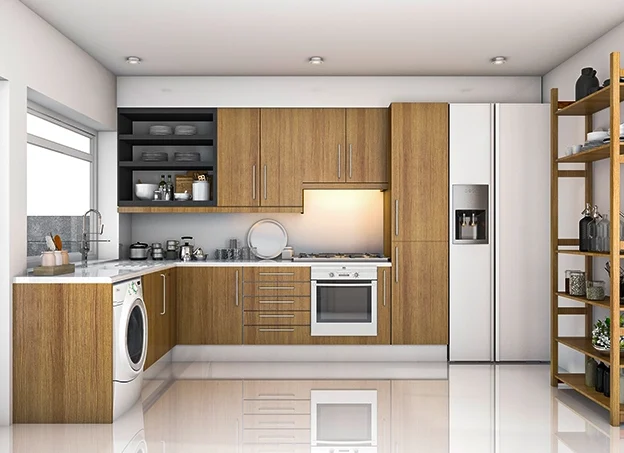
MDF (Faserplatte mittlerer Dichte) kitchen cabinets are made from finely ground wood fibers, resin, and wax, which are combined and then pressed under high heat and pressure to form dense, smooth boards.
This process gives MDF a uniform texture that is perfect for achieving flawless painted finishes. Because of its smooth surface, MDF cabinets are ideal for modern, sleek designs, especially when you want a seamless, consistent look.
What Are Plywood Kitchen Cabinets?
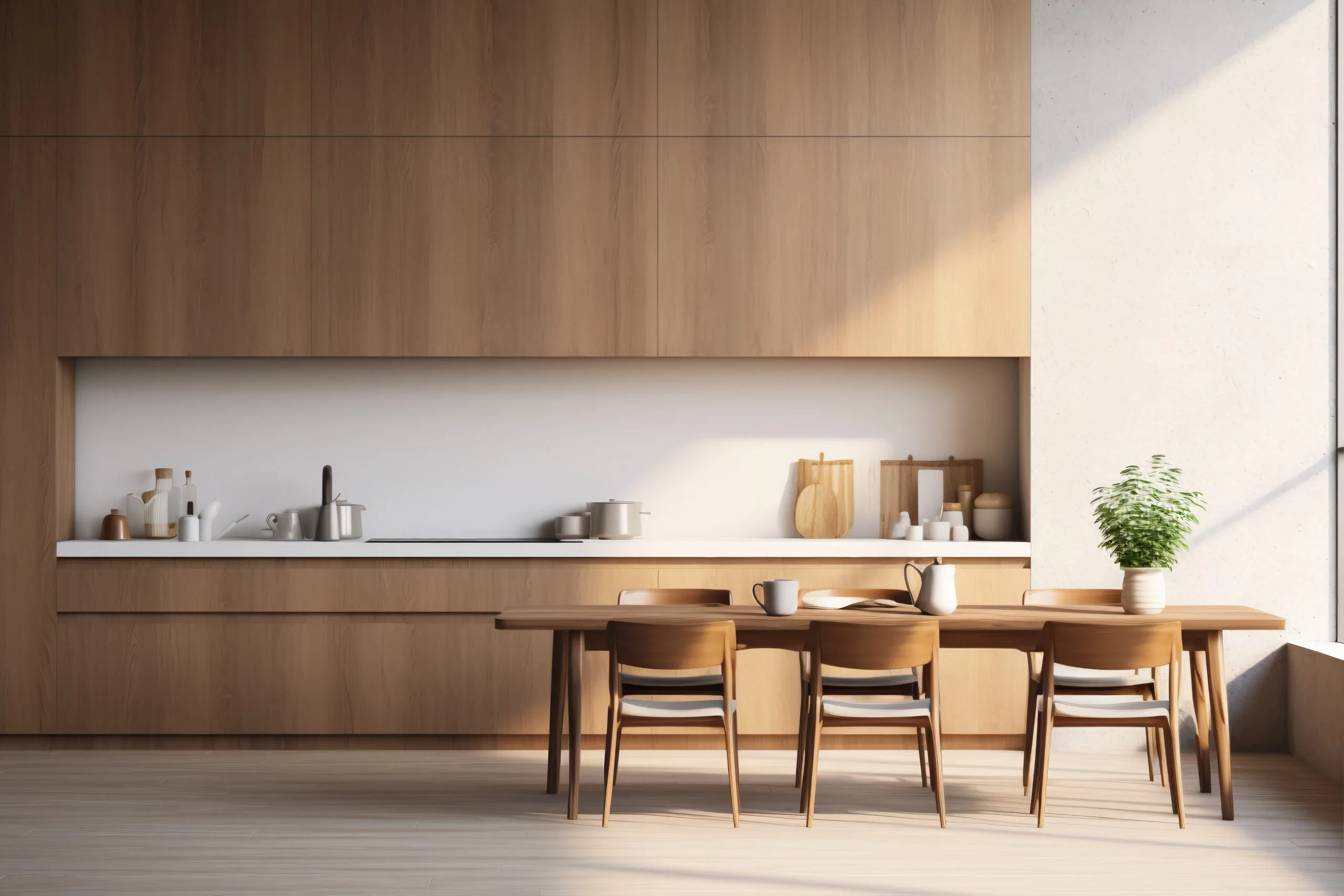
Sperrholz Küchenschränke are built from multiple thin layers of wood veneer, glued together with each layer’s grain running in opposite directions. This cross-grain structure gives plywood excellent Stärke, Stabilität, Und resistance to warping, making it a top choice for long-lasting kitchen cabinetry.
Plywood is especially valued for its ability to handle moisture better than other engineered wood products, which is crucial in areas like near sinks or dishwashers. It also showcases a natural wood grain, giving cabinets a warm, organic look that fits well in both traditional and contemporary kitchens.
MDF vs. Plywood Kitchen Cabinets: Key Comparison

Wählen zwischen MDF Und Küchenschränke aus Sperrholz comes down to how you want your kitchen to perform and look long-term. Here’s a clear comparison to help you decide what fits your needs best.
1. Material Strength and Durability
Sperrholz is the stronger option, making it better suited for heavy-duty applications like shelves and base cabinets.
Its construction of layered wood gives it excellent structural integrity. On the other hand, MDF is dense but lacks the same strength, making it more prone to damage under pressure or weight.
2. Resistance to Moisture and Wear
Sperrholz is naturally more moisture-resistance and holds up better in areas exposed to humidity, such as kitchens or bathrooms.
MDF, if not properly sealed, can absorb moisture and swell or disintegrate over time, making it less ideal for wet areas.
3. Ease of Work and Installation
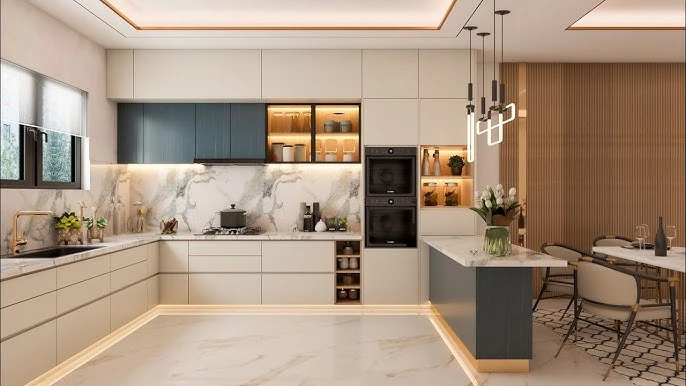
Wenn Sie suchen ease of customization, MDF is easier to cut and shape, making it a good option for intricate designs or custom cabinetry.
Sperrholz, while still workable, is a bit more challenging to cut cleanly and requires more care during installation to avoid splintering or misalignment.
4. Environmental Considerations
MDF is made from recycled wood fibers, making it a more eco-friendly option in terms of reducing waste. However, it can release formaldehyde unless low-emission products are used.
Sperrholz, when sourced responsibly, can be eco-friendly, especially if it’s FSC-certified. It’s also recyclable but involves harvesting wood, which may impact forests if not managed sustainably.
How to Choose the Right Kitchen Cabinet Material
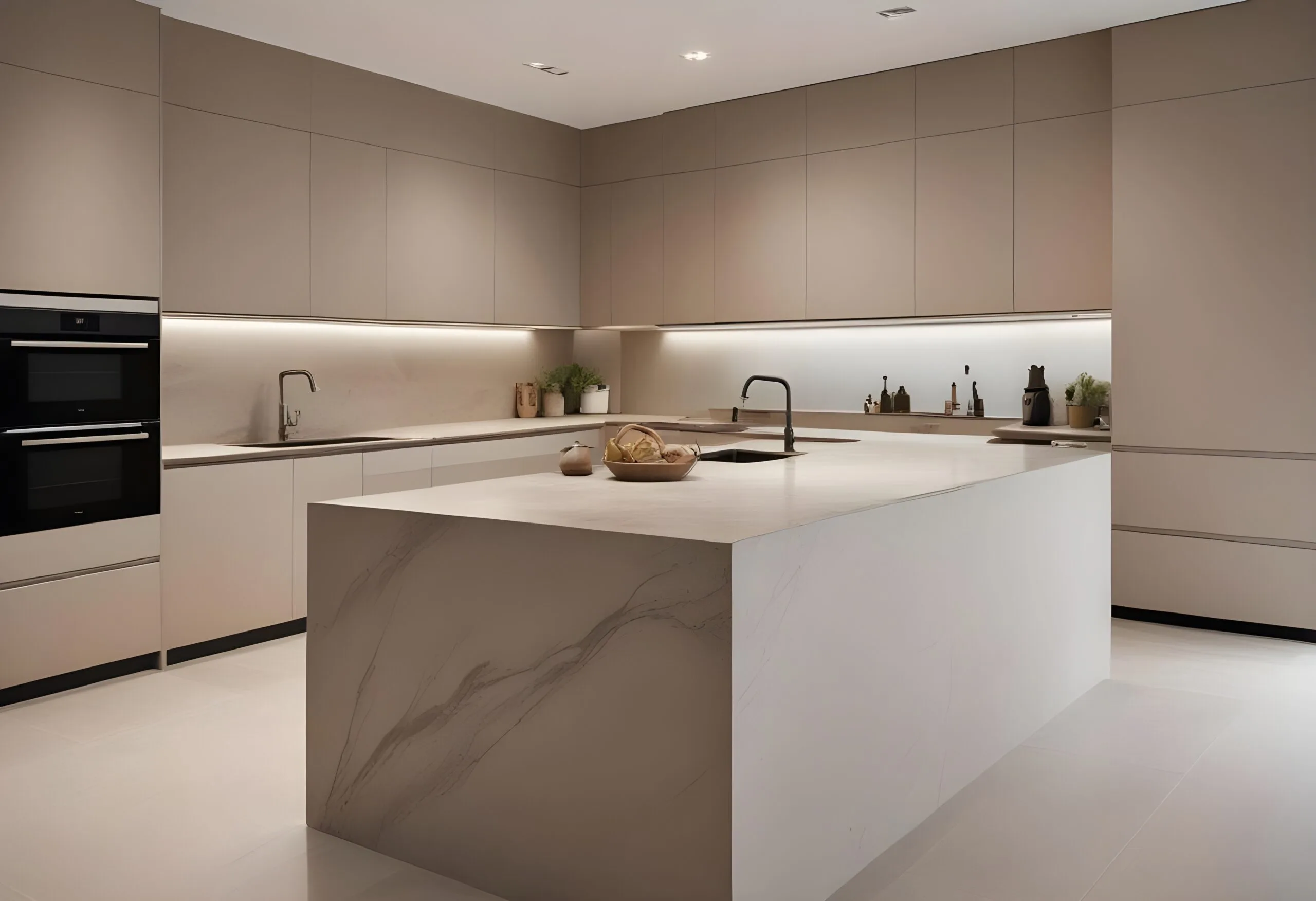
Still unsure whether MDF oder Sperrholz Küchenschränke are right for you? It really comes down to your needs, budget, and lifestyle. Here’s how to make the smart choice:
Wählen MDF if you want a smooth, painted finish, have a tight budget, and your cabinets will be in dry, low-impact areas. It’s a great option for modern, minimal designs where aesthetics matter more than strength.
Go with Sperrholz if you need cabinets that are strong, dauerhaft, and able to withstand moisture—especially for base cabinets, shelving, or near sinks. It’s ideal for busy kitchens and those who want natural wood grain appeal.
Also consider your long-term plans. If you’re remodeling for resale value or heavy daily use, plywood may offer better return on investment. But if you’re refreshing your space on a budget, MDF gives you the look you want without overspending.
FAQs
1. Why is MDF cheaper than plywood?
MDF is cheaper because it’s made from recycled wood fibers mixed with resin, making production faster and less costly. Sperrholz, on the other hand, uses multiple thin layers of real wood veneer, which takes more time, skill, and resources to manufacture.
2. Can MDF be used in kitchens?
Ja, MDF can be used in kitchens—but with caution. It’s best for dry areas like upper cabinets or decorative panels. In spots that face frequent moisture, like under the sink, MDF should be sealed properly or avoided to prevent swelling and damage.
3. How to prevent MDF from swelling in moisture-prone areas?
To protect MDF in humid spaces, always seal all edges with a waterproof primer and paint or laminate it thoroughly. Use moisture barriers, install away from direct water sources, and clean up any spills quickly to extend its lifespan.
Abschluss
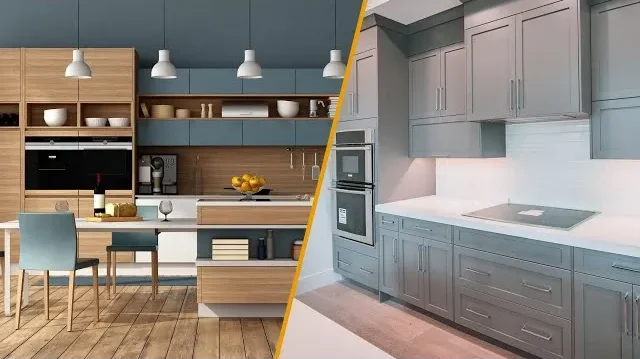
MDF is ideal for budget-friendly, smooth-finish projects in dry areas, while plywood offers stronger, moisture-resistant durability for kitchens and bathrooms.
Choose based on your budget, style, and location needs—or consult an expert to find the perfect fit for your project.




 English
  Italian
  French
  German
  Spanish
  Portuguese
  Japanese
  Korean
  Russian
  Arabic
  Thai
Thai  Chinese