Introduction
The kitchen: it’s where meals and memories are made. And in the midst of modern kitchen designs, the island stands out. But why the surge in popularity? Let’s dive in.
A Brief Overview of Kitchen Islands
Kitchen islands are standalone counters in the heart of the kitchen. From basic tables to units with appliances, their roles in homes have grown. They offer more workspace, storage, and sometimes seating. Whether you’re eyeing an IKEA kitchen island or a small kitchen island, there’s a style for every home. They’re not just functional; they’re a statement. But is it the right statement for everyone? Let’s explore.

The Many Types of Kitchen Islands
The Classic IKEA Kitchen Island
When you think of modern, affordable furniture, IKEA likely comes to mind. The IKEA kitchen island combines minimalistic design with practical features, making it a favorite for many homeowners. Typically built with a clean look and sturdy materials, these islands are not only visually appealing but also offer functional storage and workspace solutions.
Portable & Rolling Kitchen Islands
For those who value versatility, the portable kitchen island or rolling kitchen island is a game-changer. Need more space? Roll it out of the way. Hosting a gathering? Move it to the center for an impromptu buffet. These movable options suit smaller kitchens and those who love reconfiguring their space.

DIY Kitchen Islands
DIY enthusiasts, this one’s for you! The DIY kitchen island lets you infuse your personal touch into your kitchen. Whether you’re transforming an old table or crafting from scratch, the possibilities are endless. And the best part? It’s tailored to your needs and aesthetic.
The Upside to Having a Kitchen Island
Kitchen Islands with Seating
A major benefit of kitchen islands is the additional seating they provide. Whether it’s a small kitchen island with seating for a cozy breakfast nook or a large kitchen island with seating for 4 or more, it’s a great way to incorporate casual dining right in the heart of your home.
Kitchen Islands with Drawers and Storage
One can never have too much storage in a kitchen! With kitchen islands with drawers and cabinets, you get ample space to stash away utensils, pots, pans, and other essentials. Some even come with specialized storage for wine bottles, spice racks, or trash bins, keeping everything neatly tucked away.

From Small Kitchen Islands to Large Ones
Size matters, but with kitchen islands, you have a range to choose from. Small kitchen islands are perfect for tighter spaces, still offering added prep space or storage. Meanwhile, large kitchen islands can become the focal point, ideal for bigger kitchens where they can serve multiple purposes.
Style and Aesthetics: Waterfall, Marble, and Rustic Kitchen Islands
Kitchen islands aren’t just functional; they’re also a style statement. Waterfall kitchen islands extend the countertop material down the sides, creating a seamless look. Those seeking luxury might opt for marble kitchen islands which ooze elegance. And for a warm, homey vibe, rustic kitchen islands with wood finishes and traditional designs are the way to go.
Features & Accessories Worth Considering
Butcher Block Island Tops
For those who love cooking, butcher block island tops are a dream. Made of straight cuts of wood glued together, these tops provide a durable and sanitary surface for chopping and preparing meals.
They blend seamlessly with most kitchen decors and can be easily refinished to maintain their beauty.
Kitchen Carts and Stands
Not ready to commit to a permanent island or need more space temporarily? Kitchen carts and stands are your go-to.
These mobile units offer the flexibility of moving them around as needed and are especially handy in smaller kitchens where space is at a premium.
Waterfall Edge Countertops
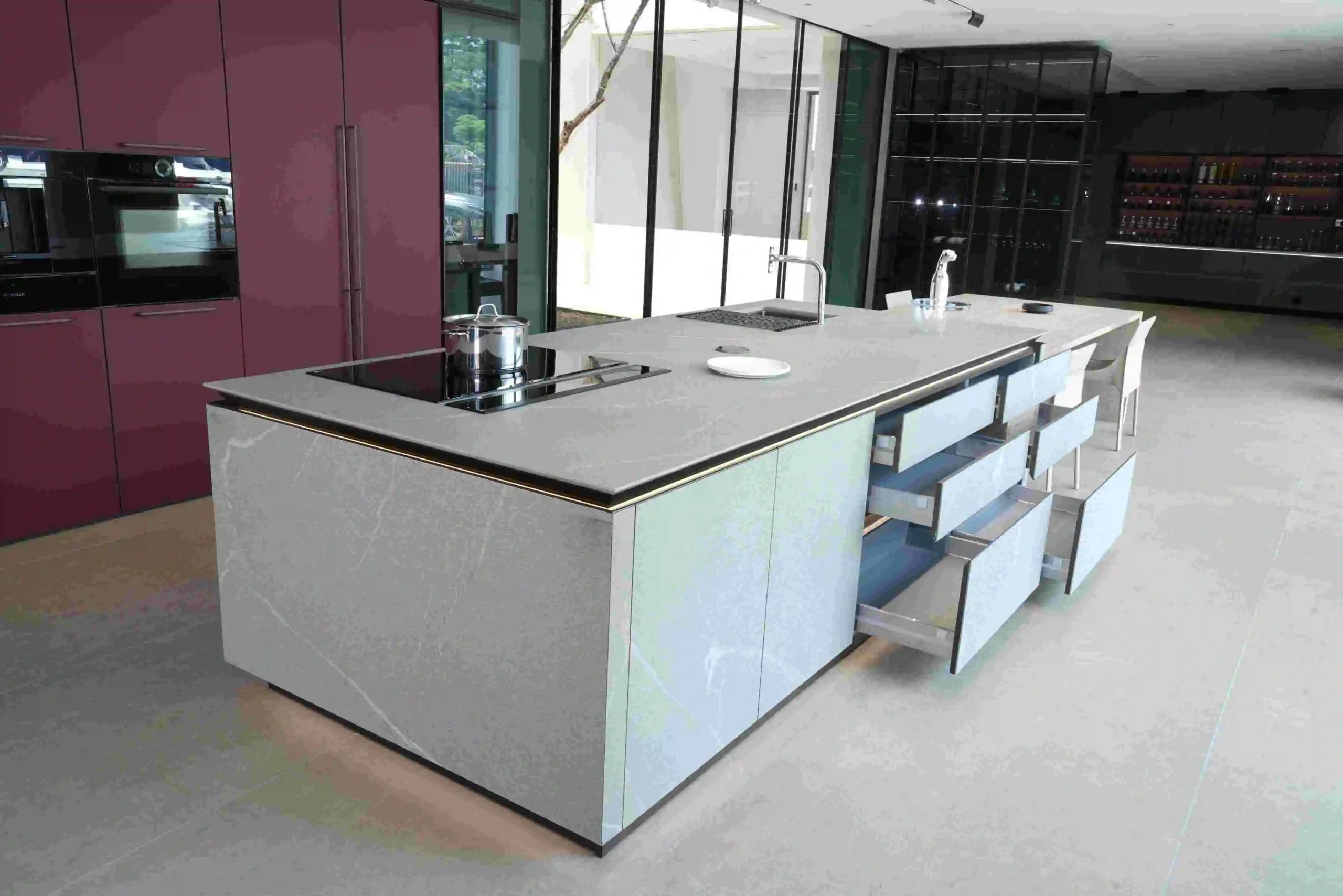
The waterfall edge countertop is a design feature where the countertop material spills over the edge and flows vertically down to the floor, mimicking the cascading effect of a waterfall. Not only does this add a touch of modern elegance to the kitchen island, but it also protects the sides from potential dings or scratches.
Island Cabinets and Decor
Island cabinets serve a dual purpose. While they provide ample storage space for your utensils and kitchen essentials, they also form the base structure for most islands. Picking the right cabinet design and adding some decor can significantly enhance the island’s overall appeal, turning it into a centerpiece for your kitchen.
Making the Most of Your Kitchen’s Layout
L-Shaped Kitchen with Island
For kitchens with an L-shaped layout, adding an island can enhance the functionality of that unused central space. Perfectly fitting into the nook created by the two perpendicular countertops, this setup makes for an efficient work triangle. It bridges the gap between key work areas and provides an additional surface for preparation, serving, or seating.
U-Shaped Kitchen with Island
The U-shaped kitchen layout is already a cook’s dream because of its efficient design. Inserting an island in the center not only offers more counter space but also provides an additional station for multitasking. With everything within arm’s reach, this layout with an island becomes the ultimate hub for cooking, dining, and socializing.
Double Island Kitchen
For those lucky enough to have a spacious kitchen, double island kitchens are worth considering. This layout includes two separate islands, each serving a unique purpose. One might be for food prep, featuring sinks and appliances, while the other could be purely for dining and entertaining. It’s a luxe design choice that ensures ample space for all kitchen activities.

FAQs Related Kitchen Islands
Kitchen islands offer added workspace and seating, but they can limit space, add costs, and introduce design complexities, especially concerning placement of sinks. It’s a balance of aesthetics and functionality.






 English
  Italian
  French
  German
  Spanish
  Portuguese
  Japanese
  Korean
  Russian
  Arabic
  Thai
Thai  Chinese