When decorating a home, furniture is important in creating the right aesthetic. For the dining area, the table is an essential feature that must be durable and complement the overall interior design. When choosing a dining table for the home, there are several factors to consider, such as durability, maintenance requirements, cost, and aesthetics. Both ceramic and glass materials are commonly used for dining tables. While glass dining tables may seem attractive for their transparency, ceramic dining tables provide multiple advantages that make them preferable overall.
Listed below are various reasons why ceramic dining table is better than glass dining table
Resilience to Temperature Changes
Large temperature fluctuations from hot pans, dishes, or other kitchen elements can cause the glass to contract or expand abruptly. This thermal stress makes glass vulnerable to fracturing or shattering if not given time to adjust to temperature changes gradually. Ceramic is engineered to manage temperature variations with more effectiveness as its molecular structure can accommodate expansion and contraction in a steady, controlled manner. Dining spaces located in proximity to cooking areas will benefit from the added safety provided by a ceramic top dining table, as it mitigates the risk of heat-related damage.
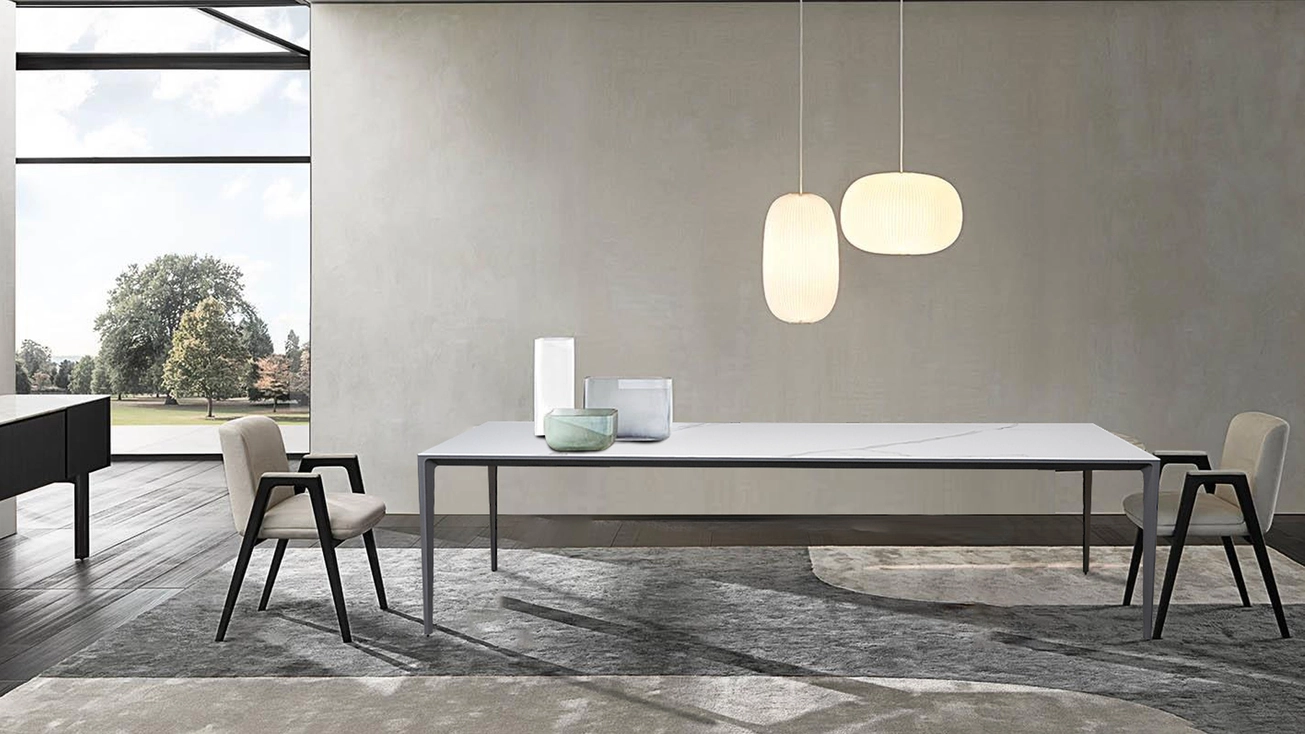
Durability
Ceramic materials are much harder and more resistant to damage than glass. Over time and repeated use, glass tables can develop nicks, cracks or breaks more easily from impacts or heat. On the other hand, ceramics can withstand heavier loads and are difficult to crack or chip unless under intense force. The solid ceramic structure ensures it will maintain its shape and finish even after years of family dinners. Homeowners need not worry about replacements or repairs as frequently with dining room ceramic tables as they may experience with fragile glass.
Cost-effectiveness
While the initial purchase price of glass and ceramic tables may seem similar, ceramic tables for dining are more cost-effective in the long run. This is because glass tables need to be replaced more often as glass is a delicate material that cannot withstand daily wear. On the other hand, a modern ceramic dining table will last many years with only nominal maintenance costs. So, the total cost of ownership of a ceramic table over its lifetime would be significantly lower than that of a glass table, which requires replacement in a shorter time frame. This makes ceramic tables a more affordable option.
Glass may acquire scratches and spots much faster, which affects its overall aesthetic appeal. Even hairline scratches are visible on a glossy glass surface. On the other hand, light scratches blend nicely with the matte texture of the ceramic dining table and do minimal harm to the overall look of the table. So, a modern ceramic dining table maintains its attractive appearance for years with little change in its look over time, unlike a glass table.
![Find Out Why Our BK CIANDRE Ceramic Table Is The Perfect Choice For You [ Marble Ceramic Table ]](https://www.bkciandre.com/wp-content/uploads/2023/04/Find-Out-Why-Our-BK-CIANDRE-Ceramic-Table-Is-The-Perfect-Choice-For-You-Marble-Ceramic-Table-.webp)
Heat resistance
Unlike glass, ceramic can withstand higher temperature changes without the risk of shattering. Hot dishes can be placed directly on a ceramic table for dining without worrying about the table cracking. This makes ceramic more suitable for family meals where dishes straight from the oven are often served.
Scratch resistance
Over time, ceramic is less likely to show scratches and water marks compared to glass. Even severe scratches do not penetrate deep into the ceramic top dining table surface and can often be polished away, preserving the table’s look. This is contrary to glass, which permanently retains any scratches marrying its aesthetic.
Customization
Modern ceramic dining table comes in a wider variety of styles, shapes, sizes and color options, offering flexible customization to suit any interior decor theme. From traditional to modern designs, dining room ceramic tables can be tailored to match the décor of eclectic homes. In contrast, glass limits choices mostly to simple rectangular or square silhouettes. This makes ceramic tables for dining more versatile for individual tastes.
Child Safe
Glass poses a higher risk of injury to small children and pets, as any impact can cause the glass to shatter into sharp fragments. At the same time, a ceramic dining table is much more resilient and breaks into larger smooth pieces, reducing injury risk substantially. So ceramic is a preferable material for households with young children or pets as it provides a safer surface.
Eco friendly
The manufacture and disposal of ceramic materials generate much lesser carbon emissions compared to glass. This is because the raw materials required for ceramic, like clay, are naturally available and require fewer processing steps. At the same time, glass production involves energy-intensive melting and shaping processes. Additionally, broken ceramic pieces can be recycled more easily than glass shards. So, the ceramic dining table has a lower environmental impact, making it the greener choice over glass.
Resistance to Stains and Scratches
Strong acidic or basic substances that stain can more easily etch glass, while ceramic glazes provide a waterproof barrier. Similarly, the hardness of ceramic protects its surfaces from mild abrasions and scratches that inevitably occur through routine use. Tablecloths or serviettes sliding across a glass top may cause minute abrasions visible over the years. In contrast, ceramic maintains a like-new, polished look regardless of daily wear and tear. Stain-proof and scratch-resistant ceramic tabletops keep their aesthetics longer without requiring as much maintenance effort.

Maintenance
Glass requires very careful maintenance to keep it looking spotless. It needs to be cleaned gently to avoid scratches, which may further spread. Any water or liquid spill needs to be wiped immediately to prevent spotting and etching. The ceramic dining table is much easier to maintain as it is non-porous, so water, stains, and dirt do not get absorbed into the surface. Light scrubbing is usually sufficient to maintain a clean, glossy ceramic table. Modern ceramic dining tables can even be wiped using a mild detergent, which makes regular maintenance hassle-free.






 English
  Italian
  French
  German
  Spanish
  Portuguese
  Japanese
  Korean
  Russian
  Arabic
  Thai
Thai  Chinese