Kitchen cabinets are the backbone of your cooking space. They store and define the whole look. Metal kitchen cabinets, with their clean lines and durability, are a favorite among homeowners looking for a modern and sleek look.
This guide goes into the world of metal kitchen cabinets, their styles, benefits, and installation tips.
Style: Your Metal

You should first know what metal you want to use:
Stainless Steel
The classic choice looks clean and polished. Pairs well with modern kitchens and industrial spaces. The reflective surface of stainless steel adds light and makes the room feel bigger.
Aluminum
A lightweight and versatile option, aluminum cabinets have more finishes than stainless steel. You can paint it to match with your existing decor.
Powder-coated for a matte finish that adds texture, or left with a brushed aluminum look for an industrial feel. You can customize your kitchen and have a style that’s exactly what you want.
Copper
Copper cabinets add warmth and vintage charm to your kitchen. The patina that develops over time is unique and cozy. But copper needs to be maintained with a copper cleaner to keep its shine.
Galvanized Steel
This one gives you a rusty and industrial look. Galvanized steel cabinets often come pre-treated with a zinc coating that gives them a weathered look. It is perfect for farmhouses or industrial kitchens.
More:
While the above are the most common, metal cabinets can be further customized with different door styles. You can choose flat panel doors for a clean look. Or shaker doors for a classic touch, or raised panel doors for a traditional feel.
Some high-end manufacturers even offer textured finishes. Hammered or brushed metal could add extra sophistication, and you can have a kitchen that’s truly yours.
Durability: Built to Last
Metal is the most durable material used in cabinetry and has many benefits:
Won’t Warp, Crack, or Water Damage
Unlike wood cabinets, metal won’t warp or crack from moisture or humidity. Perfect for areas that get wet, like kitchens and bathrooms. And it won’t cause water damage, which is a big concern in kitchens with lots of spills.
Easy to Clean and Disinfect
Metal surfaces are super easy to clean and disinfect. A quick wipe down with a cloth and mild soap and they look like new. Great for busy kitchens where hygiene is key.
Fire Resistant
Metal cabinets are more fire-resistant than traditional wood cabinets. So you have an extra layer of safety in your kitchen in case of a fire.
Pest resistant
Unlike wood, metal is termite and insect-free. So, no worries about pests damaging your cabinets, and your kitchen will be pest-free.
Recyclable
Metal is an eco-friendly material that can be recycled at the end of its life. So metal cabinets are a sustainable choice for environmentally aware homeowners who want to reduce their footprint.
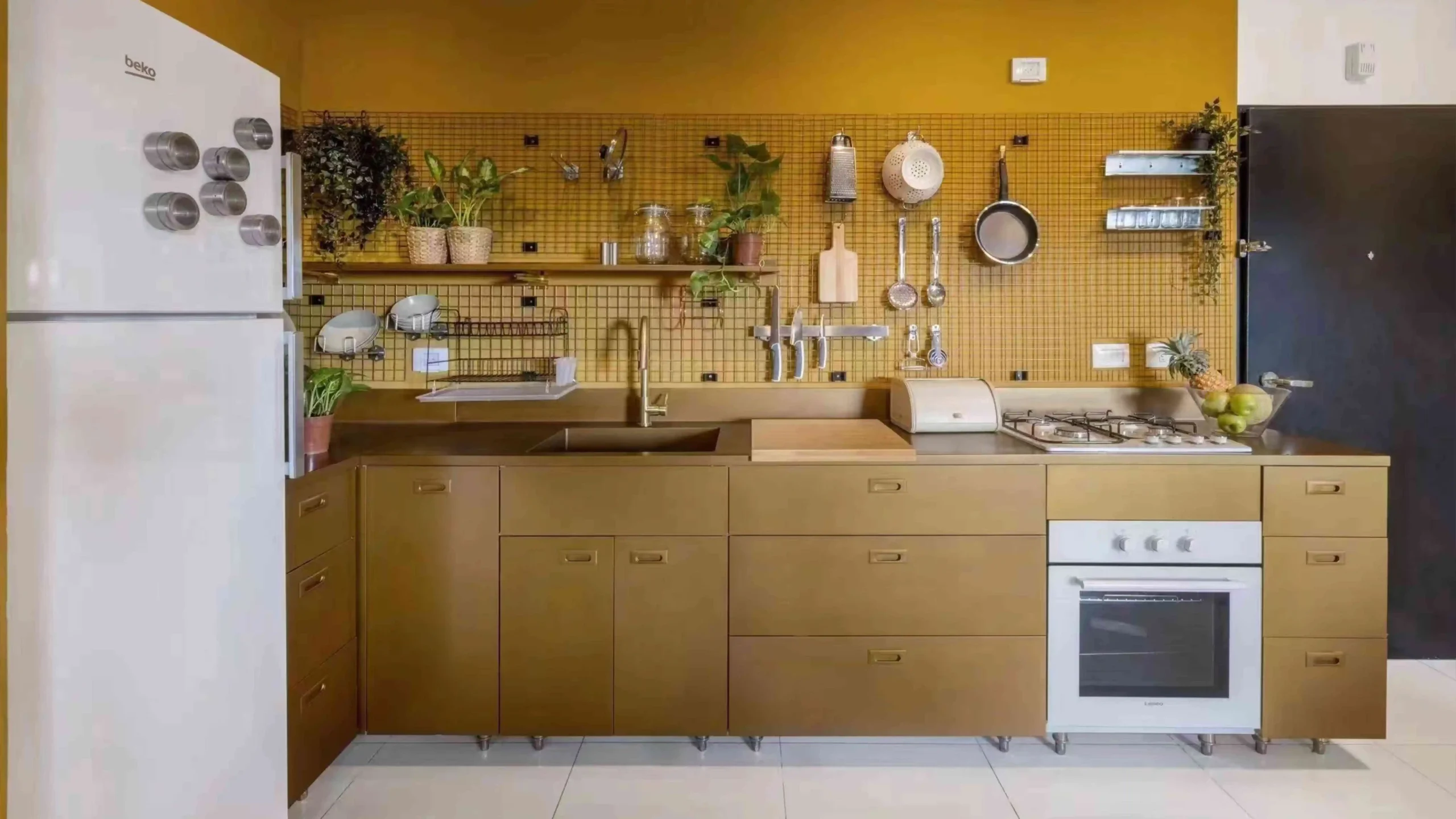
A Step-by-Step Guide to a Perfect Finish
Installing metal kitchen cabinets requires precision and skill. Here’s a simplified breakdown of the process:
Preparation
Here are the preparatory steps you will take:
Demolition: If you have existing cabinets, they should be removed and disposed of properly. Identify and protect all electrical and plumbing lines during demolition.
Subfloor Leveling: The subfloor where the new cabinets will be installed needs to be level and plumb. Any unevenness will affect the alignment of the cabinets and will look crooked or uneven. A level subfloor is a perfect and professional installation.
Wall Reinforcement: Metal cabinets can be heavier than wood cabinets depending on the style and thickness of the metal. Depending on the weight of your chosen cabinets, walls may need to be reinforced to support the cabinets. Especially to prevent sagging over time.
Cabinet Assembly: If your cabinets are not pre-assembled, you should assemble them according to the manufacturer’s instructions. This involves screwing or using special hardware to connect the cabinet sides, shelves, and back panels.
Installation
Now comes the major part: installation. Here are the steps you should consider:
Cabinet Placement
Once assembled, each cabinet needs to be placed accurately in its position. This involves measuring and marking the wall to ensure proper placement. Screw the cabinets to the wall studs using heavy-duty screws or metal brackets.
Make sure to level and align each cabinet using a level and tape measure. Any misalignment at this stage will result in uneven gaps and not a polished finish.
Countertop Installation
Once the cabinets are secured, the countertop material can be installed. This step requires measuring and cutting to fit the countertop between the cabinets and backsplash.
Depending on the countertop material (granite, quartz, etc.), professional installation is recommended. For complex countertop shapes or delicate materials, a professional installer will give a perfect fit and avoid costly mistakes.
Hardware Installation
With the cabinets and countertops in place, you can install the cabinet hardware like knobs, pulls, and hinges. Go for hardware that matches the style of your cabinets and kitchen. Be mindful of the size, finish, and functionality of the hardware to be both beautiful and functional.
Backsplash Installation
The backsplash protects the wall behind the countertop from moisture and adds a design element. Metal sheets, tiles, or even a continuation of the countertop material can be used for the backsplash. Choose a backsplash material that matches your cabinets and countertops to achieve a cohesive look.
Appliance Installation
Major appliances like ovens, cooktops, and dishwashers can now be installed according to their instructions. Make sure to provide proper ventilation and electrical connections for all appliances.
Refer to the appliance manuals and manufacturer’s guidelines for specific installation requirements. You should try to avoid any safety hazards or malfunctioning appliances.
Finishing Touches
These are the finishing touches you should follow:
Doors and Drawers: Hang cabinet doors and make sure drawers slide smoothly. Adjust as needed to achieve proper alignment and function.
Caulking: Apply caulk around the countertop perimeter where it meets the wall and backsplash to create a watertight seal. Choose a caulk color that matches your overall design for a seamless finish.
Cleaning: Once installed, remove any debris and clean the cabinets and countertops thoroughly. This will give your new kitchen a fresh and polished look.

Hiring a Professional
While the above is a general guide, installing metal kitchen cabinets can be a tricky process. Proper alignment, secure fastening, and precise countertop fitting are crucial.
For homeowners who are not DIY-inclined, hiring a professional kitchen installer is highly recommended. Professionals have the expertise to ensure a perfect and long-lasting installation.
They can handle complex tasks like countertop cutting. Make sure all parts are properly secured and aligned, saving you time, effort, and frustration.
Maintenance Tips
Here are some cleaning recommendations to keep your metal kitchen cabinets looking great and functional for years to come. In addition, there are some tips for minor scratches or dents on different metal surfaces:
Cleaning Recommendations
For cleaning the major metals, here is what you should do:
Stainless Steel Cabinets
- Take a soft cloth and mild dish soap.
- Wipe in the same direction as the grain to avoid streaks.
- For tough stains or fingerprints, use stainless steel cleaner or polish. Apply with a soft cloth and buff dry with a clean cloth.
Powder-Coated Metal Cabinets
- Use a sponge and mild detergent.
- Avoid abrasive cleaners or scrubbing pads that will scratch the powder coat.
- Rinse with water and dry properly to prevent water spots.
Brushed Aluminum Cabinets
- Choose a non-abrasive cleaner for aluminum surfaces.
- No harsh chemicals or abrasive pads that will scratch or dull the brushed finish.
Vintage Metal Cabinets
- Clean vintage metal cabinets with care so as not to damage the original finish.
- Damp cloth and gentle soap to gently remove dirt and grime.
- Avoid abrasive cleaners that will strip the patina or decorative accents.
Minor Scratches or Dents
Here is what you should do to prevent scratches and dents:
Stainless Steel
- Minor scratches on stainless steel can be buffed with a stainless steel cleaner or polish.
- Apply the cleaner and rub gently in the direction of the grain.
- For deeper scratches, use a stainless steel scratch repair kit. It usually includes a polish and abrasive pad.
Powder-Coated Metal
- Touch up minor scratches on powder-coated metal cabinets with touch-up paint or a repair kit from the manufacturer.
- Clean the area thoroughly and apply the touch-up paint according to the manufacturer’s instructions.
Brushed Aluminum
- Minor scratches on brushed aluminum are less noticeable due to the texture.
- Soft cloth and mild abrasive cleaner for aluminum to buff out minor scratches.
- For deeper scratches, use a touch up pen or clear coat for aluminum surfaces.
Vintage Metal
- Address minor scratches or dents on vintage metal cabinets with care to preserve the patina.
- A gentle cleaner is ideal for cleaning the area.
- For minor touch-ups, consult with a restoration specialist or use metal-specific touch-up paint that matches the original finish.

Customizing Your Metal Kitchen Cabinets
Metal kitchen cabinets offer a sleek, modern aesthetic with unmatched durability. Stainless steel, aluminum, copper, and galvanized steel are popular choices, each bringing unique benefits like resistance to warping, water damage, and pests. Customizing options include mixing materials, adding textures and patterns, and incorporating glass elements to enhance design and functionality. While DIY installation can save costs, hiring a professional ensures precision and quality. Metal cabinets are easy to clean, fire-resistant, and eco-friendly, making them a practical and stylish choice for contemporary kitchens.
Conclusion
Metal cabinets bring modern style and strength to your kitchen. Choose from sleek stainless steel, versatile aluminum, or warm copper to match your style. Unlike wood, they resist water, warping, and pests.
While the initial cost may be higher, the durability and ease of cleaning make them worth it. This guide has given you the styles, the benefits, and the installation. Go for the shine of metal cabinets and have a beautiful kitchen for years to come.
Ready to transform your kitchen with the brilliance of metal cabinets? Explore BK Ciandre‘s premium selection of stainless steel, aluminum, and copper cabinets.
FAQs
1.What Are Metal Kitchen Cabinets?
Metal kitchen cabinets are cabinets made primarily from metals such as stainless steel or aluminum. These cabinets offer a sleek, modern look and are often used in contemporary and industrial kitchen designs.
2. Are Metal Kitchen Cabinets Durable?
Yes, metal kitchen cabinets are durable. They are resistant to heat, moisture, and pests, making them a long-lasting option for a kitchen setting.
3. How Do You Keep Metal Cabinets from Rusting?
To keep metal cabinets from rusting, regularly clean them with mild soap and water. Ensure they are dry after cleaning, and consider applying a rust-resistant primer or paint for extra protection.
4. Are Metal Kitchen Cabinets Expensive?
Metal kitchen cabinets can be more expensive than traditional wood cabinets. The cost varies based on the type of metal and design, but they are generally priced higher due to their durability and sleek appearance.
5. Are Metal Cabinets Coming Back in Style?
Yes, metal cabinets are coming back in style. They offer a modern, industrial look that is increasingly popular in contemporary kitchen designs, especially in black and gold color schemes.





 English
  Italian
  French
  German
  Spanish
  Portuguese
  Japanese
  Korean
  Russian
  Arabic
  Thai
Thai  Chinese